
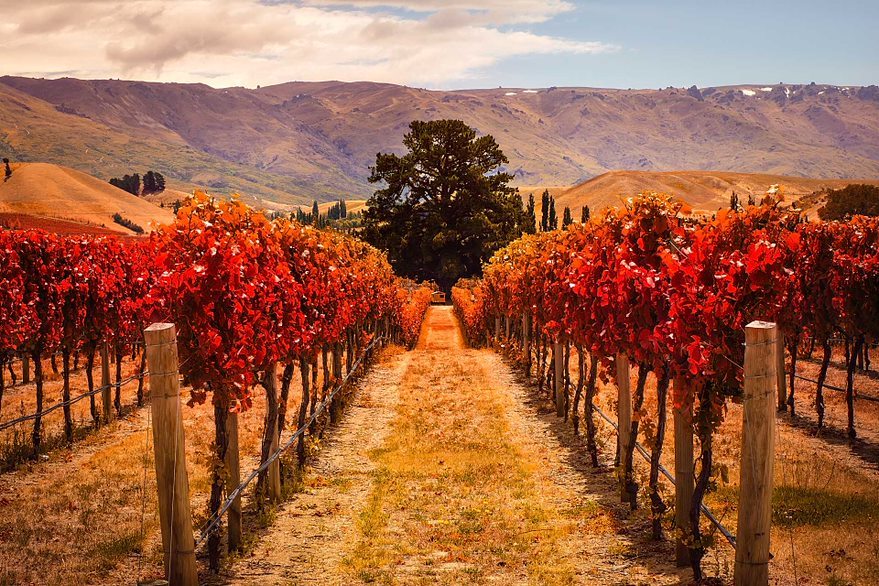
October is doing that slightly confusing thing where it can't quite decide what season it is.
We're in that shoulder season, although this year, autumn seems to be easing itself in rather than making much of an entrance. If the change of season were a wine bottle, it's more gentle Alsace Riesling shoulders than the broad, sturdy shoulders of Bordeaux. No dramatic change of direction. Just a slow slope from summer into autumn.
Anyway, the point is, I'm still sporting flip flops and a sundress at every given opportunity, and yet Christmas events are already filling up at Essex Wine School.
So I'm not going to tell you that autumn has arrived and you should immediately put away the rosé and start drinking big, heavy reds.
Instead, here are six wines I'd actually be reaching for over the next couple of months.
And there's a reason I've deliberately left some of the usual suspects off the list.
1. A good Txakoli
If you've never tried Txakoli, autumn is as good a time as any.
This is the slightly salty, lightly spritzy white wine from the Basque Country that is brilliant with food.
It's fresh, but not just fresh. There's a savoury, almost sea-breezy quality to it that makes it fantastic with seafood, anchovies, salty snacks and anything fried.
It's also the sort of wine that makes people stop after the first sip and ask:
“What is that?”
Always a good sign.
If you're having fish and chips, I'd take this over a predictable Sauvignon Blanc or your usual bottle of fizz.
2. Mencía from Bierzo
When people talk about Spanish reds, Rioja and Ribera del Duero tend to get all the attention.
But I'd be looking further north.
Mencía from Bierzo can be absolutely brilliant: juicy red and dark fruit, herbs, a little earthiness and often a freshness that stops it becoming too heavy.
It's particularly good if you like red wine but don't necessarily want something powerful and oaky.
Think roast pork, sausages, mushrooms or a plate of charcuterie.
And if you're bored of drinking the same Merlot/Rioja/Cabernet rotation, this is exactly the sort of wine I'd try next.
3. Assyrtiko
If your idea of a white wine is that it needs to be light and fruity, Assyrtiko is worth a look.
The grape is best known from Santorini, where the wines can be incredibly fresh, concentrated and mineral, with a salty quality that makes them fantastic with food.
But there's more going on than simple acidity.
A good Assyrtiko can have real weight and texture while still feeling incredibly fresh.
I'd happily drink it with grilled fish, roast chicken, feta, prawns or a plate of salty Mediterranean food.
And if you're someone who normally reaches for Sauvignon Blanc, it's a very easy grape to get curious about.
4. Austrian Zweigelt
Here's one for red wine drinkers who don't necessarily want a big red.
Zweigelt is an Austrian grape that can make juicy, bright reds with plenty of character without coating your mouth in tannin.
Think cherries, red berries, spice and sometimes a slightly peppery edge.
It's particularly good slightly chilled.
Yes, slightly chilled red wine in autumn - but with the weather we have currently, why not?
Try it with pork, sausages, roast vegetables or anything involving smoked flavours.
It's the sort of bottle I'd put on the table when I'm cooking for friends and don't want to spend the evening explaining what everyone is drinking.
5. A dry Riesling
Not the sweet stuff from the 70s and 80s.
A dry German Riesling can be one of the most useful wines you can have around when you're eating.
It's got acidity, yes, but also flavour, texture and often a lovely savoury character.
And it is brilliant with food that can be difficult to match.
Spicy dishes. Pork. Rich sauces. Asian flavours. Salty food.
It can cut through richness without making the wine disappear.
If you've only ever encountered Riesling as a sweet wine, try a dry one.
You may have a completely different view of the grape afterwards.
6. Something orange
And finally, because autumn is as good excuse as any to try something new: try an orange wine.
Not because it's fashionable or because you need to become a natural wine convert.
Simply because different can be interesting.
Orange wine is made using white grapes but with extended skin contact, giving the finished wine more colour, texture and tannin than you'd normally expect from a white wine.
Some are beautifully savoury and complex. Others are deliberately wild and funky.
And some are, frankly, not very good.
That's part of the fun.
I'd serve a good one with a table full of things rather than trying to find one perfect food pairing: cheese, charcuterie, olives, roasted vegetables, spiced dishes and salty snacks.
It's a wine that can make an ordinary evening feel a bit more interesting.
So, what makes a good autumn wine?
For me, it's not really about colour or weight. It's about texture, freshness and food.
Summer often makes us think about wines that are cold, crisp and refreshing.
As the weather cools, I'm happy to have wines with a bit more texture and savoury character, but I don't necessarily want something huge and heavy.
That's why I think autumn is actually one of the best times of year to experiment.
You're eating more interesting food. You're cooking more. You're having people over. And there are plenty of wines that sit somewhere between “ice-cold summer refresher” and “massive red that needs a steak.”
And those are often the wines I find most interesting.
Want to try something different?
That's a big part of what we do at Essex Wine School.
Our tastings aren't about memorising lists of grapes and regions or pretending you should already know what you're tasting.
They're about trying good wines, comparing them, finding out what you like, and occasionally discovering a bottle you wouldn't have picked up yourself.
And if you're already thinking ahead to Christmas, our festive tastings are already starting to fill up.
You can see what's coming up, including our latest wine tastings and WSET courses, on the website.